
April 2026 | Grid Infrastructure | Grid Reform
TL;DR
The EU and Great Britain are both tackling the same problem: outdated grids that can't keep up with connection demand.
Great Britain's Connection Reform is already live - since June 2025 projects must prove they're ready to build to keep their queue spot, with around 3,000 applications reviewed so far.
The EU's Grids Package (announced December 2025) takes a longer-term approach through cross-border planning and faster permitting, but won't hit the ground before 2027.
The message in both markets is the same: showing up early no longer matters: what counts is proving your project is real, funded and ready to go.
Why the grid reform can’t wait
If you work in energy, renewables, data centres or anything that needs a grid connection, you'll have heard a lot of noise about grid reform over the past year or two.
In a global context of ever-increasing energy demand the gap between what grids can handle and what the economy needs from them has become impossible to ignore. Data centre electricity consumption alone is growing at a compound annual rate of 12% — more than four times faster than total global electricity consumption. The Iran conflict has added a further dimension: with fossil fuel supply chains under acute stress, the ability to generate and move clean power domestically is no longer just a climate ambition — it's an economic and strategic imperative.
Grids built for a different era are now the bottleneck standing between Europe's energy ambitions and reality. Aware of this reality, institutions across the Old Continent are putting forward grid reforms designed to update old grids to meet current demands. Here's a straightforward look at the main policies put forward by the EU and Great Britain — what they involve, how they differ, and what they mean in practice for your sector.
The EU: European Grids Package
The European Commission published its European Grids Package in December 2025. It's a response aiming to strengthen and modernise Europe’s infrastructure to ensure that Europe can integrate the volumes of renewables and electrification required to meet its decarbonisation and energy security goals. It contains legislative proposals and guidance on grid connections and contracts for difference to help EU Member States and operators implement these reforms effectively.
Across Europe, renewable curtailment cost €8.9 billion in 2024 — that's clean energy that was generated and then wasted because the grid couldn't move it. At the same time, over 1,700 GW of renewable projects across 16 countries were sitting in connection queues, unable to progress. The core issue is that Europe's grid infrastructure — and the rules around planning and permitting it — was built for a different era. Over 40% of Europe's grid infrastructure is over 40 years old and in need of upgrades. This, added to the exponential requests for new connections generates a gap between the production capacity and the speed of grid development
The Package has three main parts:
Cross-border planning:
At the moment, each country essentially plans its own grid. The Commission wants to move towards a coordinated EU-wide approach that materialises infrastructure where it is actually needed by mapping electricity and hydrogen needs across the member states and prioritising projects accordingly. It's also proposing resilience equipment designed to protect critical parts of the network from hostile action. On cost, an estimated €1.2 trillion of electricity grid investment is needed across Europe by 2040. The Package also adjusts cost-sharing rules for cross-border projects, so the financial burden is spread more fairly across the countries that benefit. The European Investment Bank and the Connecting Europe Facility are expected to play a significant role in mobilising that. Lastly, it also proposes eight "Energy Highways" — priority cross-border corridors targeting the worst bottlenecks, from the Baltic to the Iberian Peninsula to improve interconnectivity.
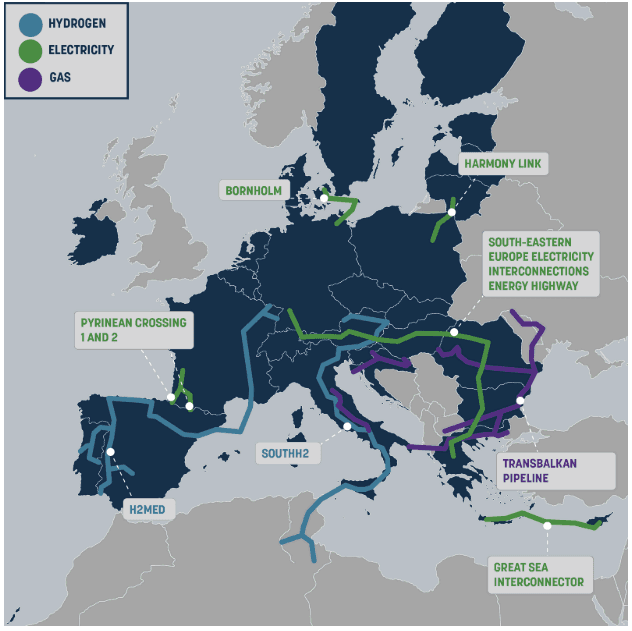
Europe's new energy highway construction plan | Source
Great Britain: Connections Reform
Great Britain has been dealing with the same underlying problem. By late 2024, the GB connections queue had grown to over 700 GW of generation and storage projects — roughly four times what the country actually needs. The old "first-come, first-served" model had no real barriers to entry, so the queue filled up with speculative applications that were never realistically going to be built. Genuine projects found themselves waiting for connection dates in the late 2030s.
The response has been a programme of reforms led by the new National Energy System Operator (NESO), working with Ofgem and the government. The main framework is referred to as ‘Connections Reform’ (or the TMO4+ reforms), and it went live in June 2025 after Ofgem approved it in April.
The principle is "first ready and needed, first connected." To hold a place in the queue, projects now need to demonstrate they're actually progressing — through planning, financing, and construction milestones — and that they're consistent with the government's clean energy plans. Around 3,000 existing applications have been assessed through a one-off exercise to sort the viable from the speculative.
The new system introduces two gates:
Gate 1 (Indicative): Projects that fail to meet readiness criteria are placed in an indicative queue without confirmed connection dates.
Gate 2 (Priority): Projects demonstrating land rights and advanced planning status receive confirmed connection dates and queue positions.
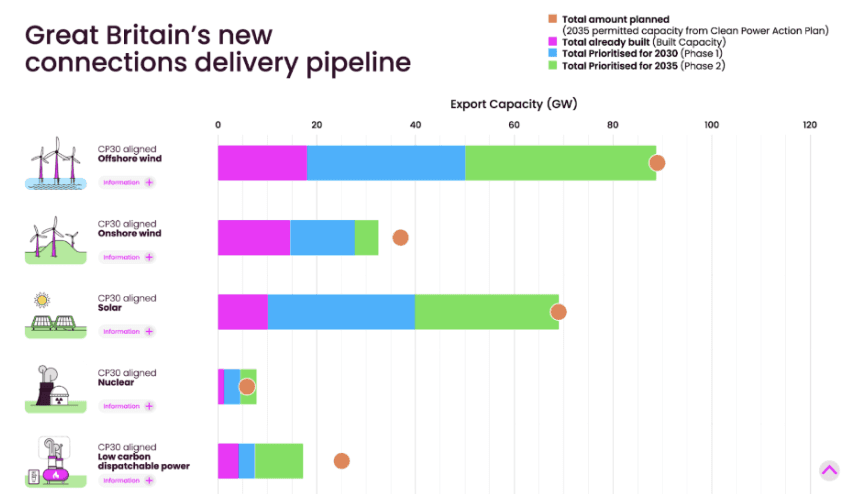
Connections Reform: A Root and branch transformation | Source
By planning connections strategically rather than reactively, the reforms are expected to save bill payers up to £5 billion in unnecessary grid reinforcement costs, while unlocking up to £40 billion a year in private investment in clean power projects.
Running alongside this, Ofgem's five-year regulatory settlement from December 2025 is aiming to unlock up to £90 billion in transmission network investment to physically upgrade the grid. Longer-term planning tools — the Strategic Spatial Energy Plan, the Centralised Strategic Network Plan, and Regional Energy Strategic Plans — are in development and will eventually replace the current CP30 Action Plan as the reference point for connection decisions.
How each policy compares
Both reforms are trying to fix the same thing: grids that haven't kept up with the energy transition. But they're doing it in quite different ways.
The EU approach is fundamentally about coordination between countries. The 27 national systems need to be brought into better alignment — which requires legislation, negotiations, and time. On the one hand that means that progress is slower and uneven, since Member States have considerable latitude in how they implement the different regulations and directives. On the bright side, a coordinated approach to grid development increases resilience and energy security in a global environment where physical and cybersecurity incidents have highlighted the risk of hostile action against the energy infrastructure.
The GB approach is more operational and immediate. With a single national system operator and clearer statutory powers, NESO has been able to restructure the connection queue and begin issuing new offers to viable projects now. The Planning and Infrastructure Act 2025 gave the government and Ofgem direct powers to move quickly where needed.
Both are converging on the same underlying idea: moving from passive systems where you join a queue and wait, to active systems where grid access is tied to genuine project readiness and strategic fit.
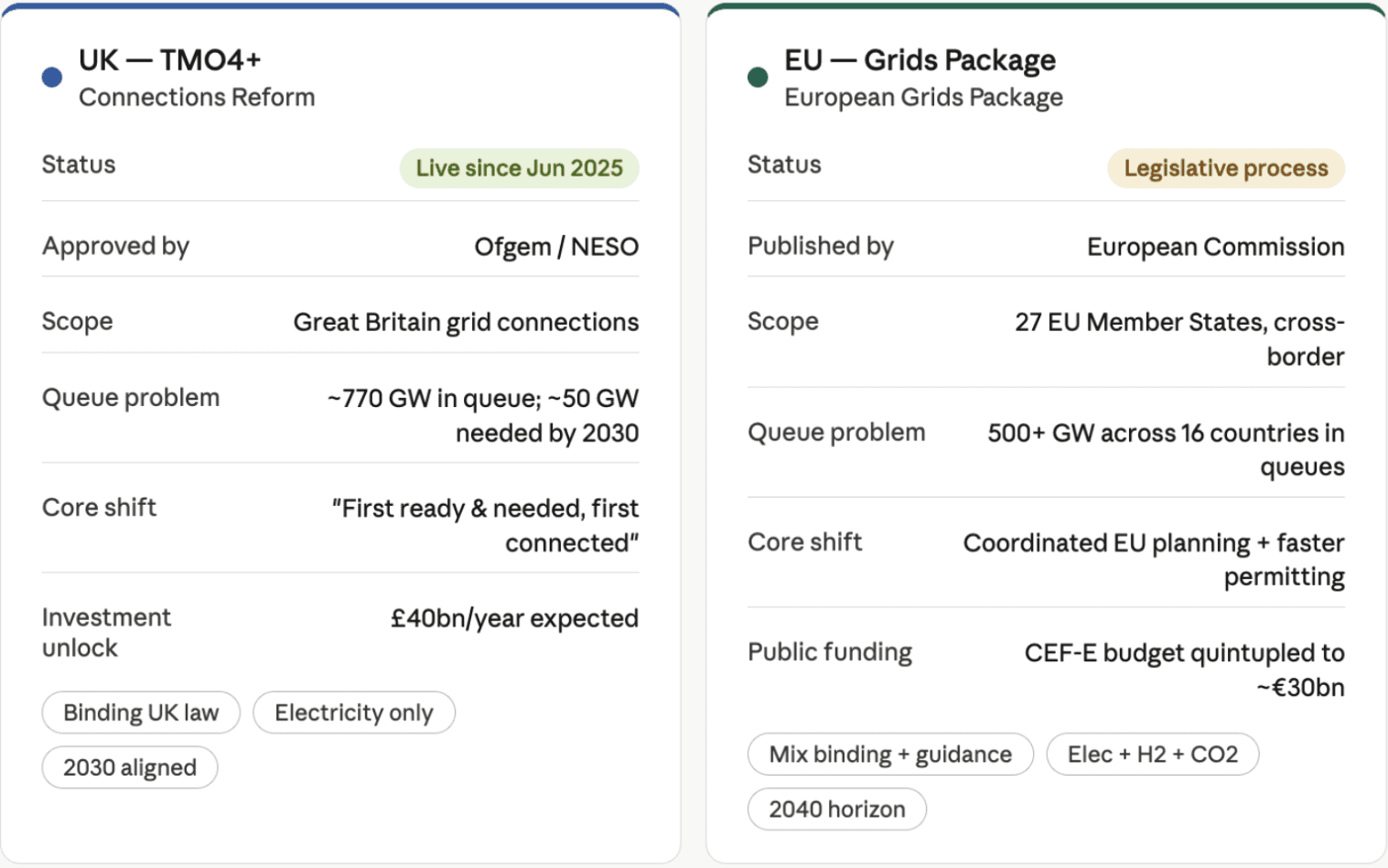
What the legislation means for each sector
The European Grids Package is legislating its way through Brussels — meaningful reform, but on a multi-year timeline and with a lot depending on Member State implementation. The Connections Reform in Great Britain is already live and actively reshaping who can connect and when. In both cases, the window for passive engagement is closing. If your projects depend on grid access, the earlier you engage with the new frameworks — and demonstrate genuine readiness — the better your position.
Renewables and storage:
The queue reforms on both sides are directly relevant here. "First-ready" principles reward projects with genuine planning progress, so developers with mature pipelines are in a better position. Those sitting on speculative applications — hoping to sell connection rights or keep options open — will find the environment much less forgiving. Now the main challenge for these types of projects is to get the necessary physical equipment, i.e., long-lead items, timely to prove readiness.
Data centres:
This sector has been growing fast enough to become a visible pressure point on both grid systems. In Great Britain,AI Growth Zones have been specifically named as strategic demand projects that will benefit from faster connection processes. Across the EU, the sheer scale of data centre demand is shaping how network operators think about large load forecasting. Getting connected quickly increasingly depends on demonstrating readiness and engaging with network operators early.
Industrial electrification:
Large loads — gigafactories, industrial decarbonisation, ports — need big, reliable connections. Both regimes are starting to create dedicated pathways for this. The EU guidance explicitly recommends that TSOs and DSOs engage large industrial users early in the planning process, including exploring direct lines. Across Great Britain, industrial sites are among the demand projects that can still progress through the queue even during reform transitions.
How Opna can help
Find out how Opna is building the market infrastructure to mobilise long-lead, mission-critical power equipment - supporting energy security, AI growth and electrification.
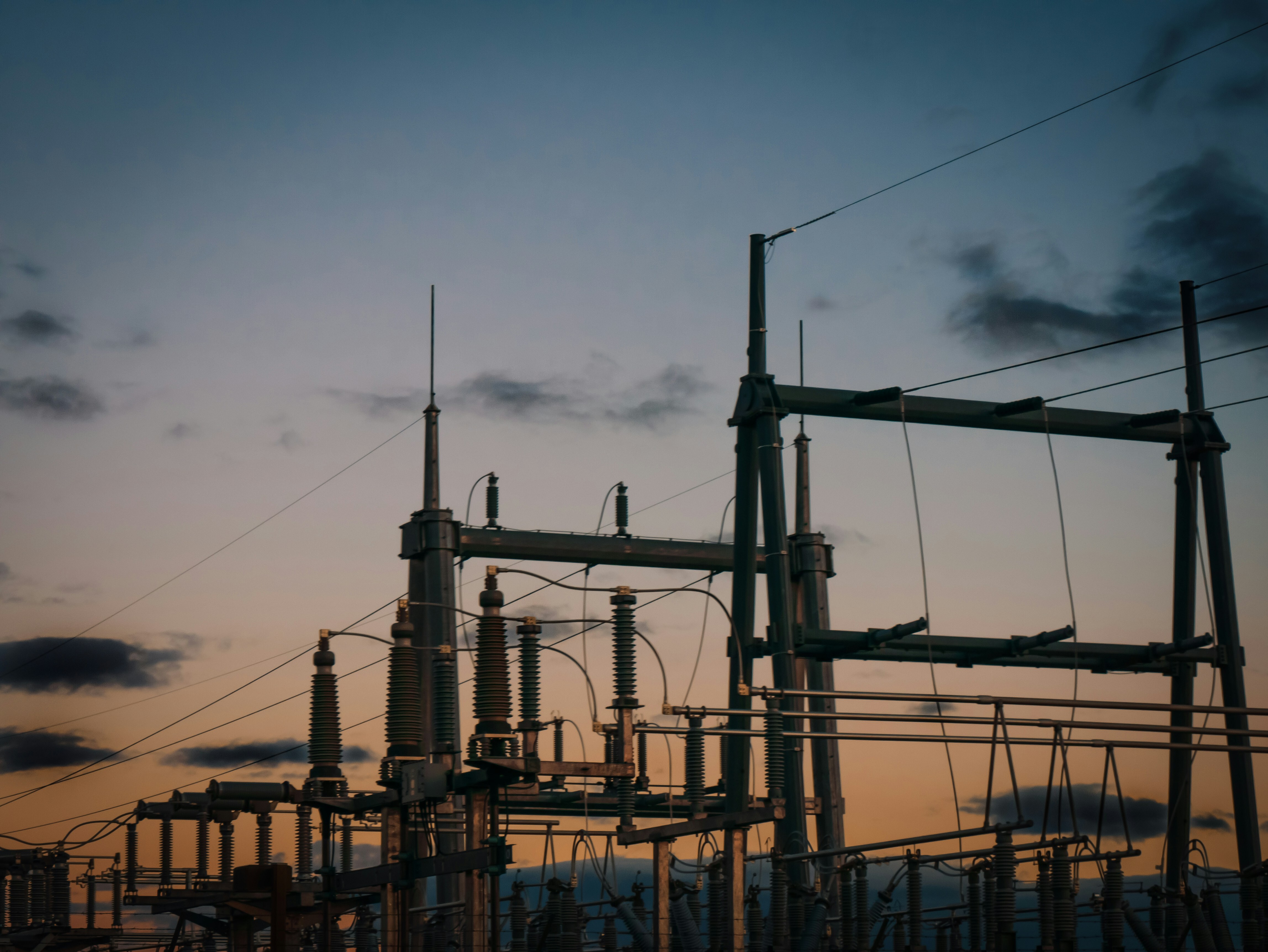
Critical Power Equipment: The Current Plug to Decarbonising Europe
The new system introduces two gates:
Gate 1 (Indicative): Projects that fail to meet readiness criteria are placed in an indicative queue without confirmed connection dates.
Gate 2 (Priority): Projects demonstrating land rights and advanced planning status receive confirmed connection dates and queue positions.