
February 2026 | Grid Infrastructure | Energy Transition
TL;DR
Europe’s clean energy rollout is bottlenecked by grid connections, not generation
A shortage of key equipment—especially large transformers—has created long lead times and rising costs
Fixing the problem requires coordinated grid reform and supply-chain planning
The Hidden Bottleneck
Europe has a generation problem — just not the one most people think. Renewable capacity is being planned and built at record pace. The UK's government has committed to Clean Power by 2030, requiring the installed electricity capacity to nearly double within five years. The European Union has pledged a renewable energy target of 42.5% by 2030. Across the continent, ambition and power production are not the obstacle.
The obstacle is getting that power onto the grid. In 2024, the IEA tracked 1,650 GW of solar and wind projects in advanced stages of development that are awaiting grid connections. Two things are needed to connect a new wind farm, solar array, or storage facility to the electricity network: a grid connection slot, and the physical equipment to make the connection happen. Both are running short. The result is a renewable energy pipeline that is ready in principle but stuck in practice — projects awaiting connection dates measured not in months, but in years or even decades.
This connection problem is not limited to power suppliers, but to consumers too. Data centres are having connection delays of up to seven years. In order to keep pace with the global AI race, developers are increasingly relying on on-site power generation, often powered by diesel and fossil fuels.
This is the 'current plug' to Europe's decarbonisation. Not a lack of political will. Not a shortage of investment capital. A shortage of substation equipment and grid access. And unless this systemic bottleneck is addressed with the same urgency as generation targets, the UK and Europe will not meet their climate commitments on time.
What Equipment Is Actually Needed?
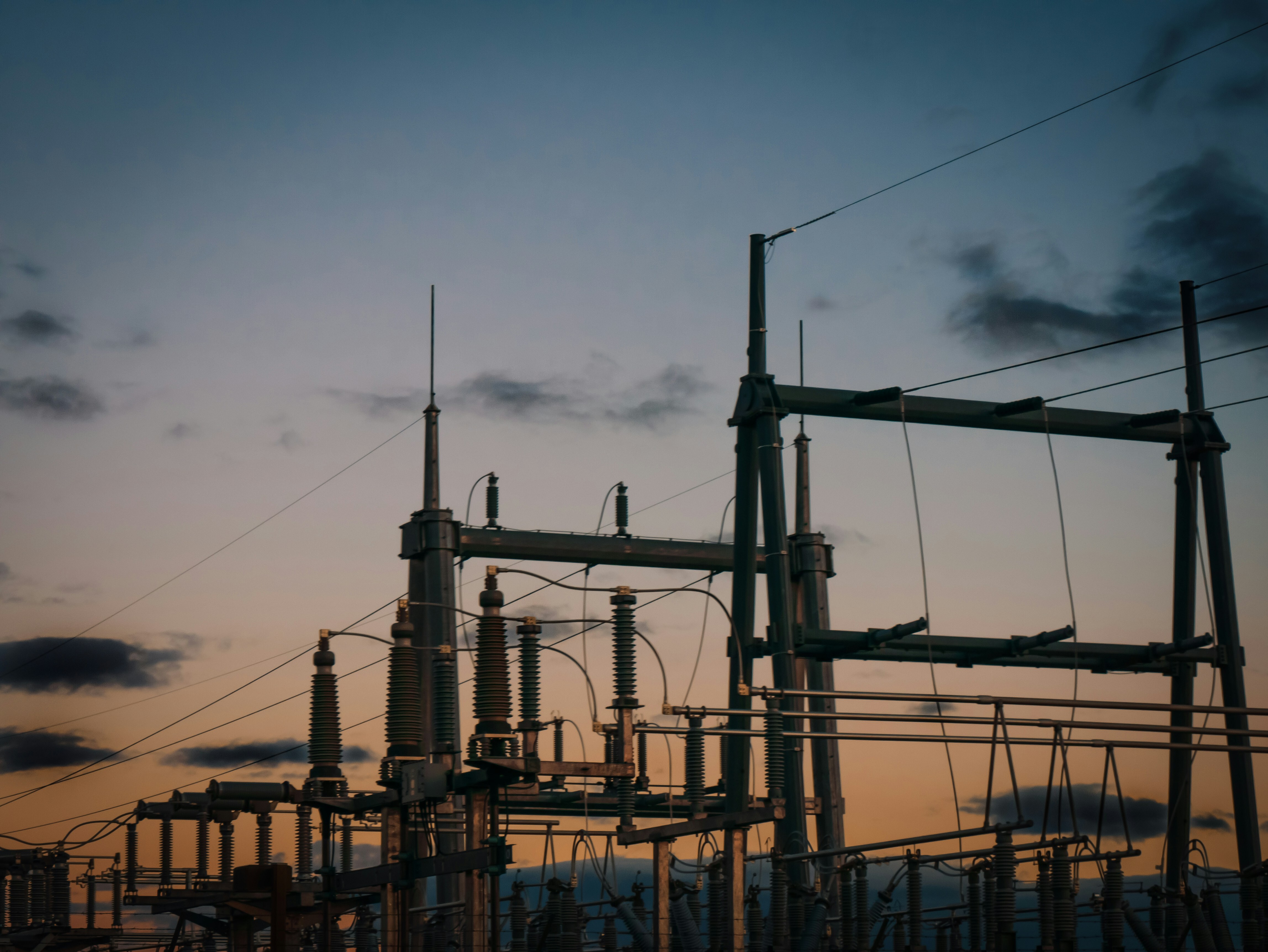
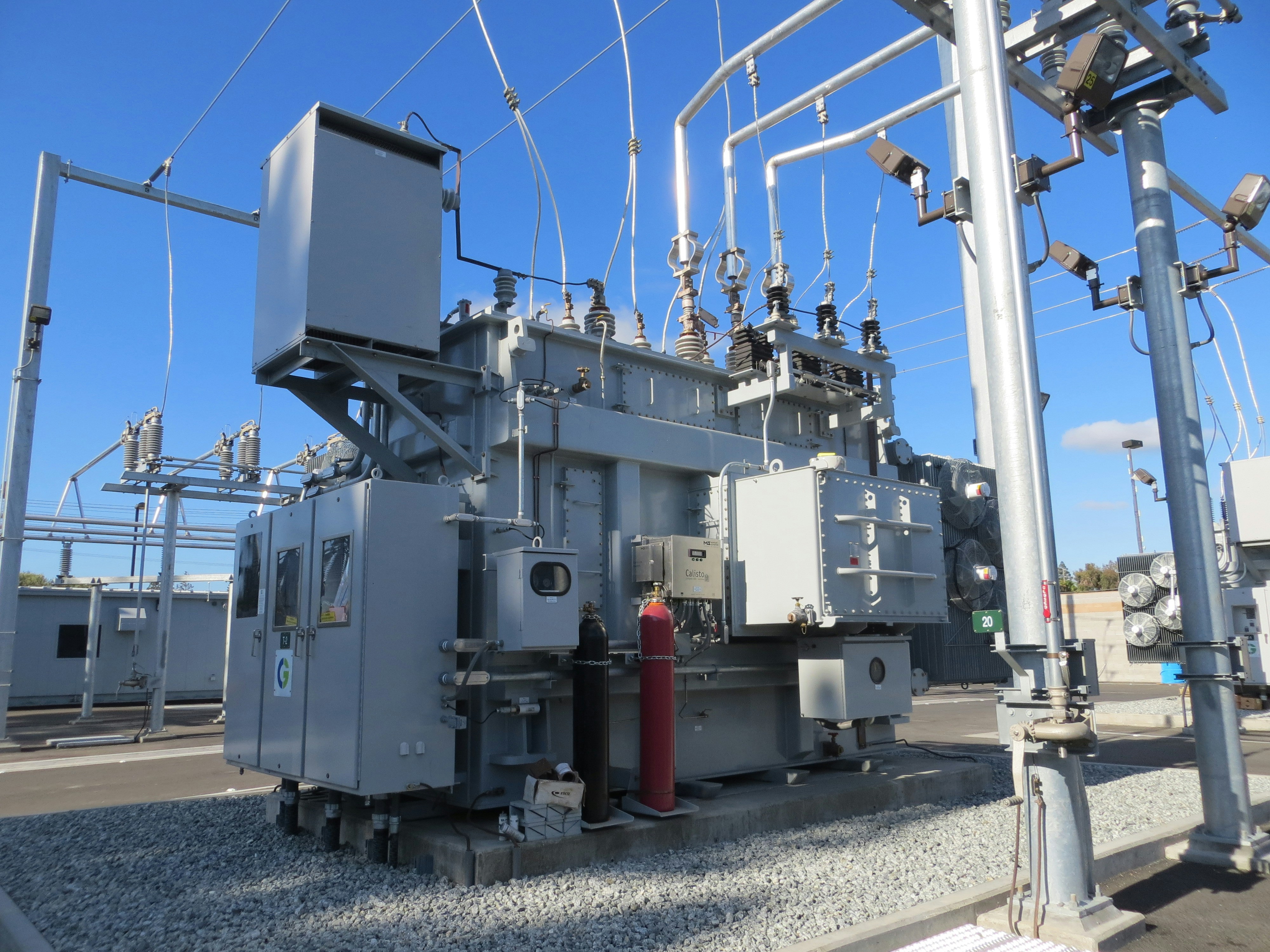
To connect a power source to the electricity grid, voltage must be stepped up or down at a substation. This is done by transformers — large, bespoke pieces of electrical engineering that are custom-built to each project's specifications. A wind farm might generate power at 33 kilovolts (kV); it needs stepping up to 132 kV or 400 kV for transmission across the network. At the other end, households receive power at 230 volts, stepped down through multiple transformer stages.
Alongside transformers, a connection requires switchgear (which controls, protects, and isolates electrical circuits), high-voltage cables, busbars, protection relays, and the civil and structural work to house it all in a substation.
These are not off-the-shelf items. A 400 kV transformer can weigh several hundred tonnes, stands as tall as a house, and contains hundreds of tonnes of grain-oriented electrical steel (GOES) — a highly specialised material with limited global production capacity.
These items are collectively known as long lead-time items (LLIs). Unlike a solar panel or a wind turbine nacelle, which benefit from standardised, high-volume manufacturing, each large transformer is bespoke. It is designed to a site-specific specification, manufactured by a small number of specialist suppliers globally, and it is not simple to swap for an alternative if delivery is delayed. As of today, there is no spot market for a 400 kV autotransformer.
The Demand–Supply Imbalance
The numbers are alarming. According to a 2025 report from the International Energy Agency, procurement lead times for large power transformers have almost doubled since 2021. It now takes up to four years to secure a large transmission-class transformer. These delays are not uniform across voltage classes. Industry practitioners report lead times of up to 15 months for 33 kV transformers, around two years for 132 kV units, and up to four years for 400 kV equipment. The higher the voltage, the longer the wait — and the harder the project to reschedule around a missed delivery.
Prices have followed supply times upward. The IEA's survey found that transformer prices have risen by around 75% in real terms since 2019, with individual orders seeing prices up to 2.6 times their pre-pandemic levels. Cable costs have nearly doubled over the same period. The principal driver is grain-oriented electrical steel, a key transformer input that is produced by a handful of suppliers worldwide and is simultaneously in demand for transformers, generators, and grid upgrades — all of which are scaling at once.
Manufacturers are not simply being inefficient. The fundamental challenge is investment uncertainty. To justify building a new transformer production line — a multi-year, capital-intensive undertaking — a manufacturer needs credible evidence of sustained long-term demand. But demand forecasts from grid operators and developers are too short-term, too prone to revision and not granular enough to justify that commitment. The result is a rational market failure: manufacturers stay cautious, lead times extend, and projects wait.
Grid Connection Crisis: Slots, Queues, and Zombie Projects
Even before the equipment problem, there is a queue problem. In the UK alone, 756 GW of capacity was sitting in the grid connection queue as of January 2025 — four times the capacity the country needs by 2030, and twice what it needs by 2050. Over 1,700 new applications were submitted in 2023 and 2024 alone. The queue had grown tenfold in five years.
The reason is structural. The UK operated a 'first-come, first-served' connection system with no penalty for inaction. Speculative developers — or simply poorly prepared ones — could occupy a grid connection slot for years without progressing. These 'zombie projects' blocked the queue, preventing viable, construction-ready schemes from connecting. Ofgem has highlighted that a large share of projects in the queue are stalled or speculative, with analysis suggesting that around 60–70% ultimately fail to materialise or connect Some ready-to-go projects faced connection dates as far away as the mid-2030s.
Reforms are now underway. In April 2025, Ofgem approved a major overhaul of the connections regime, built on NESO's new 'TMO4+' framework. Projects must now demonstrate readiness through planning milestones, financial commitments, and construction progress to retain their position in the queue. The queue has already been reduced by nearly two thirds. Shovel-ready projects can now be fast-tracked.
This is meaningful progress. But it is not sufficient on its own.
Grid Reform Alone Is Not Enough
Here lies the critical systemic gap that policy debate has not yet adequately addressed: clearing the connection queue is only half the problem. A project that gains a connection slot still needs a transformer. And if that transformer has a four-year lead time, a project with a 2027 connection date needs to have ordered its equipment in 2023. Many did not, because they did not have confirmed connection dates.
This creates a circular trap. Projects cannot order equipment without a confirmed connection date. They cannot get a confirmed date without proving readiness. They cannot prove readiness without equipment. And by the time the queue clears, the equipment lead time means the actual energisation date slips by years regardless.
Making this worse, manufacturers cannot invest in expanded capacity without credible forward-looking demand signals — and those signals require visibility across the full pipeline of projects, not just the ones that have cleared regulatory hurdles. The current fragmented, reactive procurement landscape guarantees that supply will always lag demand.
Grid reform and supply chain reform must happen together. One without the other produces a different bottleneck at a different stage of the same pipeline.
The Consequences of Inaction
The costs are already visible. Analysis from Cornwall Insight suggests the UK government is projected to miss its revised Clean Power 2030 targets by 32 GW — with a 16 GW shortfall in solar PV and 10 GW in onshore wind alone. Grid and equipment constraints are a significant contributor.
Meanwhile, curtailment costs — paid when clean electricity cannot reach consumers because grid constraints prevent its despatch — are running at approximately £1 billion per year in the UK. In 2025, the UK paid £1.5 billion turning off wind farms because the grid could not carry their output, and turning on gas to fill the gap.
The knock-on effects extend well beyond generation. Industrial electrification, green hydrogen production, EV charging infrastructure, and data centres — all of which are expected to anchor the UK's next wave of economic growth — are constrained by the same grid access problem.
Would you like to know more?
Find out how Opna is building the market infrastructure to mobilise mission critical power equipment.