
13th November 2025
This article comes from our ‘AI Infrastructure as a Trojan Horse for Climate Infrastructure’ whitepaper, published October 2025.
TL;DR
AI’s infrastructure boom is unprecedented: With over $7 trillion in projected investment by 2030, data centres are becoming one of the defining construction efforts of our time.
Hyperscale growth has limits: Concentrated facilities strain local grids, water systems, and communities, underscoring the need for a more balanced, climate-aligned approach.
The future is distributed intelligence: Smaller, modular, and distributed data centres can turn AI infrastructure into a foundation for resilience and the net-zero transition.
The Current Scenario: Hyperscale Boom or Bust?
The world is in the middle of an AI-driven infrastructure surge. Data centres — the physical engines behind artificial intelligence — are being built at unprecedented speed. In 2025 alone, the four largest tech companies are expected to spend around $350 billion on new facilities, with total global spending on AI infrastructure reaching $7 trillion by 2030.
At the heart of this buildout sits the hyperscale data centre — vast, centralised facilities designed to train and serve massive AI models. These centres already represent roughly 44% of global capacity, projected to rise to 61% by 2028. Concentrated in regions such as the U.S., China, Europe, and the Gulf, they have become symbols of digital progress — and flashpoints for environmental and social strain.
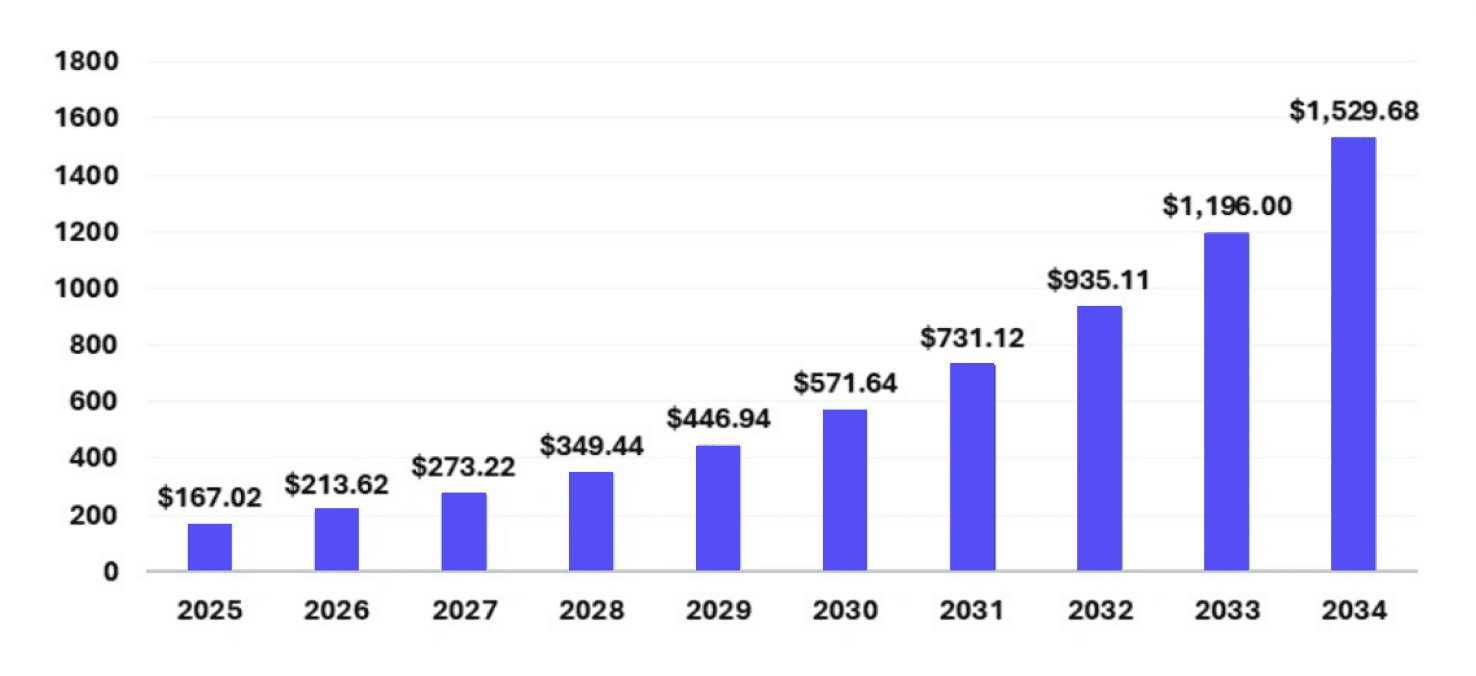
Hyperscaler Data Centre Market Size 2025 to 2034 (USD Billion) | Source
When Scale becomes strain
Hyperscale facilities offer efficiency at scale, but their impacts are mounting. In Chile, conflicts have erupted over scarce water resources; in the United States, communities have raised concerns about grid stress and noise pollution; and in India, farmland displacement and air-quality impacts are fuelling local resistance.
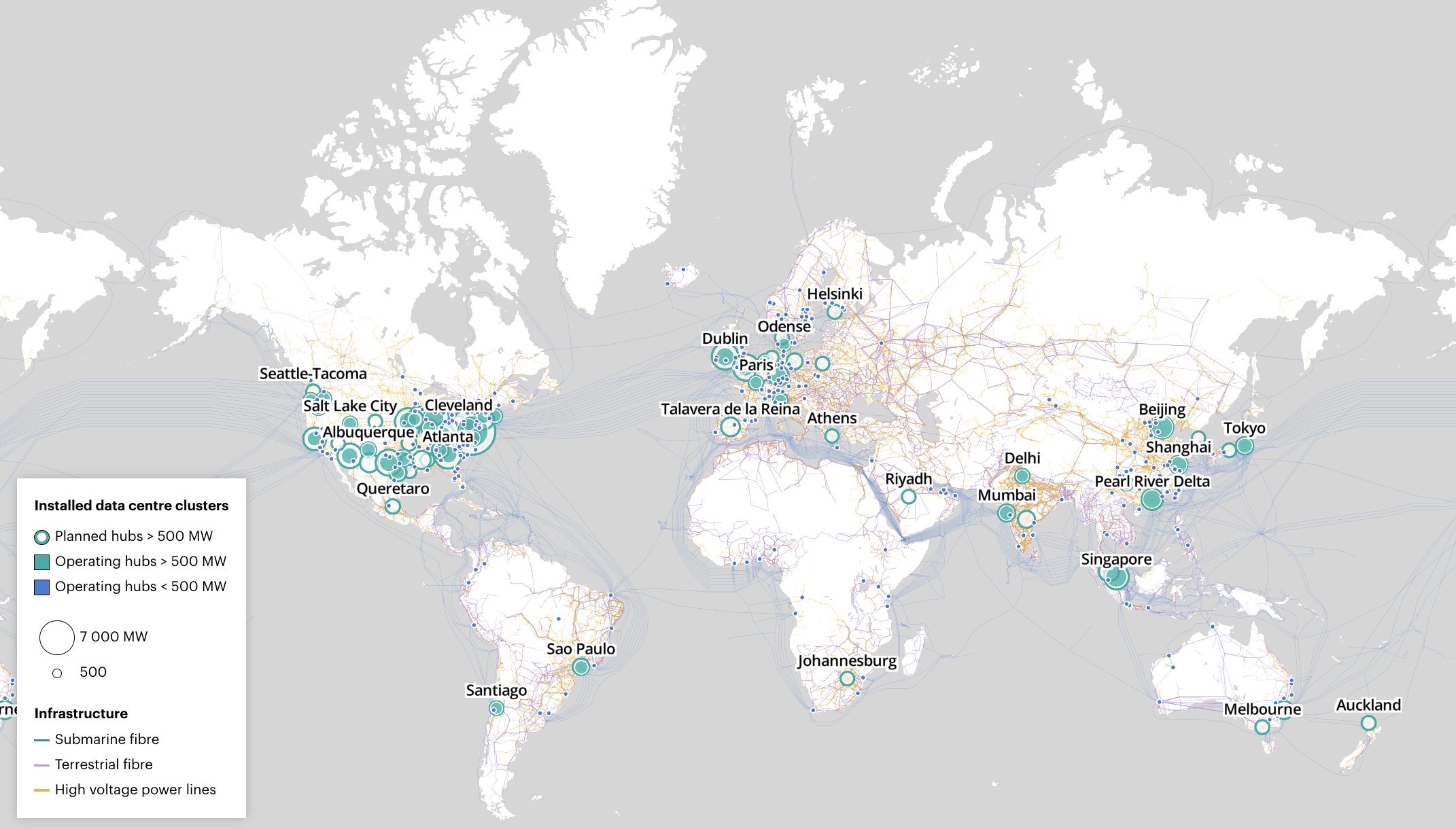
Data centre hubs alongside associated power and digital infrastructure | Source
Even as trillions pour into compute capacity, global investment in climate solutions lags far behind. Without integration, AI’s physical footprint risks deepening inequality and accelerating environmental pressure instead of alleviating it.
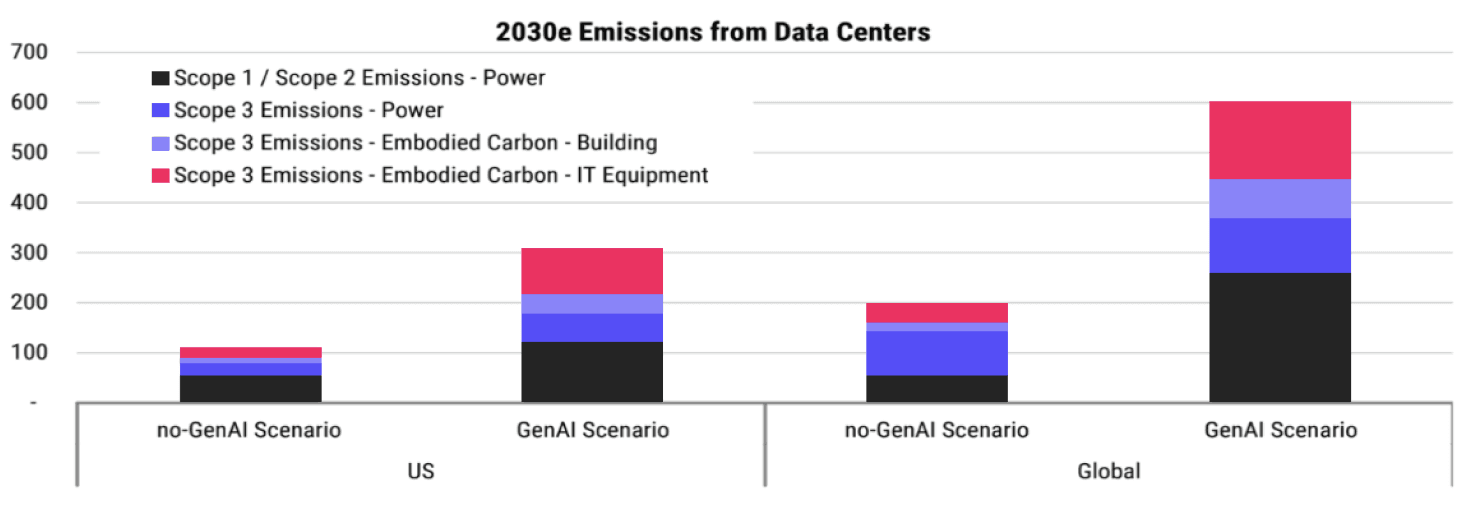
2030 Annual Green House Gas (GHG) emissions from data centres with and without AI development in a Business as Usual scenario (Morgan Stanley resource estimates)| Source
The Real Value Shift: From AI Training to Inference
The hyperscale model mirrors the logic of old industrial expansion — centralised, energy-intensive, and extractive. But AI’s true value lies in inference, applying trained models to real-world problems in healthcare, logistics, and manufacturing.
As computing returns on scale diminish, the focus will shift from building more GPUs to deploying intelligence efficiently. Inference is where AI delivers tangible benefit, and where innovation will depend on more distributed, resource-aware systems.
The next phase of AI infrastructure must prioritise distribution over concentration. Smaller, distributed, modular data centres, those located closer to renewable-energy sources and population hubs, can reduce transmission losses, balance grid loads, and unlock local economic benefit.
Want to know more? Contact us at hi@opna.earth