10 September 2026
TL;DR
The steps from application to energisation, in order:
Work out your route and rough point of connection: transmission (apply to NESO) or distribution (apply to your regional DNO, for example National Grid Electricity Distribution, UK Power Networks, SSEN, Northern Powergrid, Electricity North West, or SP Energy Networks). A budget estimate or pre-application feasibility helps here.
Gather what they need up front: site location, what you are building, required MVA capacity, target energisation date, load profile, and any site constraints.
Submit the formal connection application to that operator and pay the fee.
Receive the connection offer, including the point of connection, connection date, cost, and technical requirements.
Accept within 90 days and sign the connection agreement; that's when you commit financially.
Do the detailed design to the grid code, secure planning and consents, and decide which build works you hand to an accredited Independent Connection Provider (ICP) versus the operator.
Build: your substation and the network works, and order the long-lead equipment.
Commission, set up metering and the MPAN, and pass the operator's inspection of earthing, protection, and metering.
Energisation: the operator switches you on.
Everyone in this industry should know how to build a data centre. Far fewer can tell you how to power one because connecting a site to the grid is a different discipline, with its own rulebook and timeline. "The grid is the bottleneck" is the line you hear at every conference. It's true, and it's vague. Here's what's actually inside the bottleneck: what you apply for, what you wait on, what physically connects, and what it costs.
The energisation application process.
Apply to offer (the paperwork).
For a distribution connection, which covers most data centres up to 132 kV in England and Wales, the network operator works to guaranteed standards: a budget estimate within 10 working days if you need under 1 MVA, or 20 working days at 1 MVA or more, and a formal quotation within 5 to 65 working days depending on size. A large, complex site sits at the 65-day end. You then have 90 days to accept the offer (Ofgem guaranteed standards of service; Energy Networks Association; UK Power Networks).
Transmission connections at the largest hyperscale sites now run within timed application windows rather than on a rolling basis. The most recent window closed in August 2025, and NESO is issuing the resulting offers in tranches between February and September 2026.
Offer-to-your-connection date (the wait).
It is the queue plus the time for the network operator to build any reinforcement your connection needs. You need to amend or accept this offer before you have a firm FID date.
Your connection date (design-and-build).
Your connection date depends on two things: how many are ahead of you in the queue, and how much network reinforcement your connection needs, plus the scale of your own works. The connection date the operator gives you already includes the reinforcement. Your own side, meaning detailed design, civils, the on-site substation, ordering the long-lead equipment, then commissioning, typically runs over a couple of years for a large site and ends with the operator's inspection and switch-on.
Critical power equipment explained.
Four families of kit matter, and a data centre needs all of them.
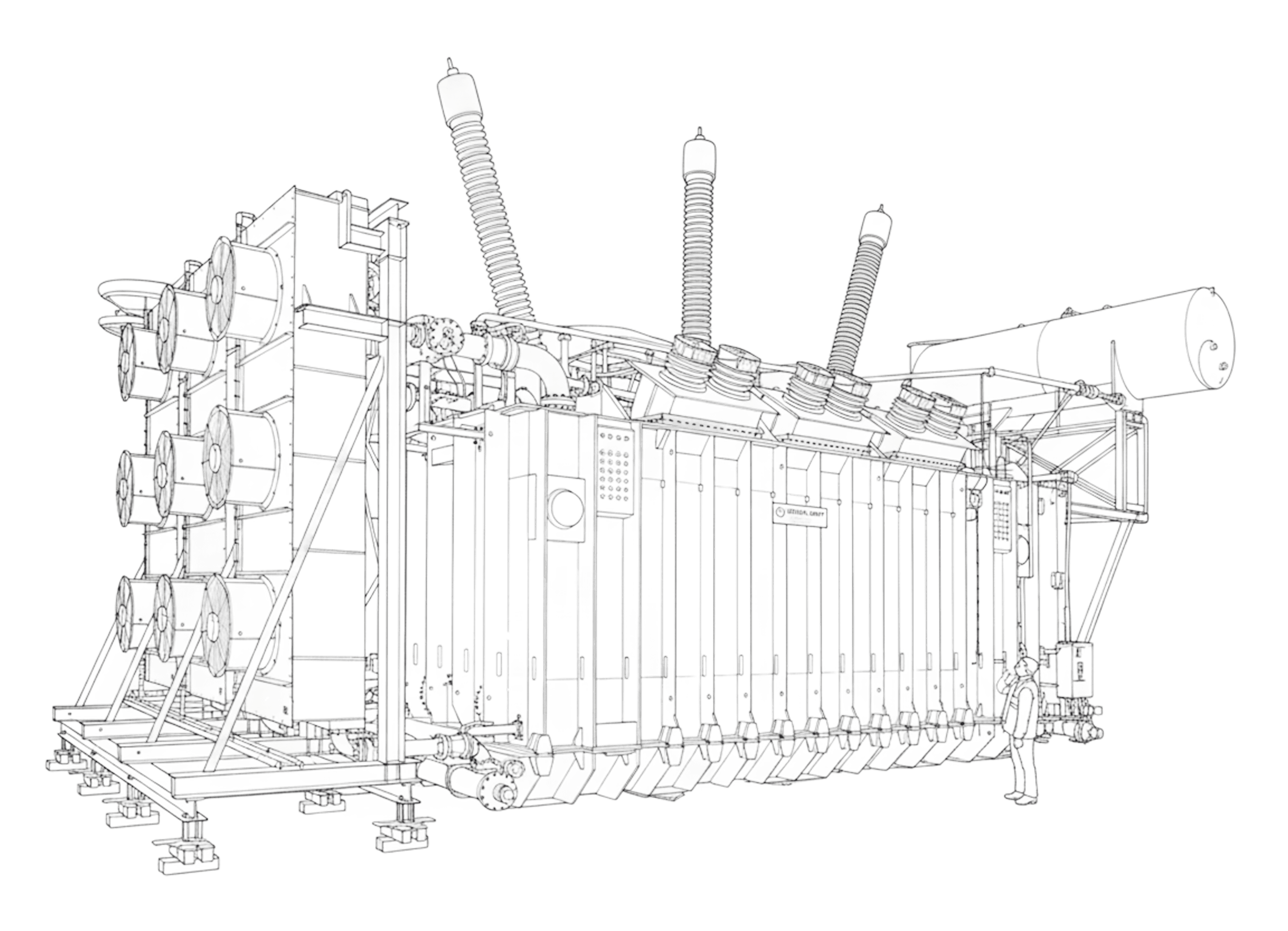
Transformers change voltage up or down. To move power long distances, the grid runs at high voltage to keep losses down, then steps it back down to the lower voltages equipment can use; every voltage change requires a transformer. The large ones are custom-built, weigh hundreds of tonnes, use special electrical steel produced by only a handful of mills worldwide, and cost millions.
Switchgear is the fuse box and isolator, scaled up. It connects and disconnects circuits and trips them open in milliseconds when a fault occurs.
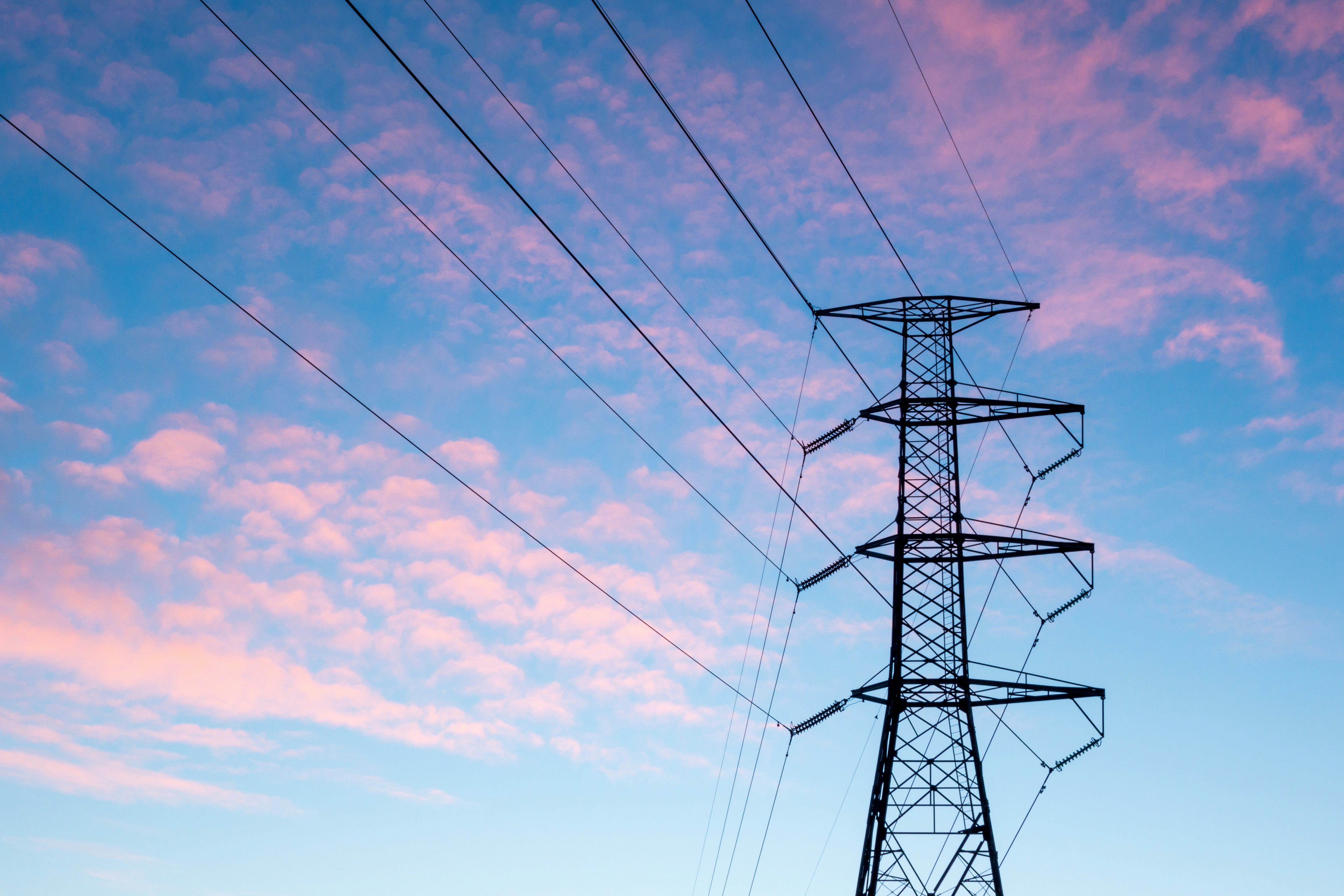
High-voltage (HV) cables carry current between the grid, your substation, and the halls. They are engineered for the exact voltage they run at and have heavy insulation.
Protection relays and control systems make the decisions. They watch for faults and tell the switchgear what to do. They are small and easy to overlook, and one missing relay panel can delay energisation on a finished site.
Around all of this critical power equipment sit the unglamorous essentials: busbars, earthing, metering, and the civil works of foundations, buildings, oil containment, drainage, and security, plus the on-site backup (generators and/or batteries) that carries the site through an outage.
The 5 steps to grid connection.
The network operator brings a circuit to an agreed point at your boundary, either a new bay in an existing grid substation or a new substation built near your site. That point is where their network ends and yours begins. Sometimes an independent connection provider (ICP), a private firm accredited to build connections, installs that link for you.
From there, high-voltage cables run to your on-site substation. At these voltages, the cables are large and single-core, usually laid underground in ducts. They do not simply bolt together end to end. Each cable end has a termination, a sealing end that controls electrical stress and lands the conductor safely into the next piece of equipment. Where two cable lengths meet, they are jointed in a joint bay. A single high-voltage joint is a day of skilled work and has to be tested before it carries load.
The cables land in switchgear, and inside the switchgear everything bolts onto busbars: solid copper or aluminium bars that act as the shared connection point. The cables do not connect to each other directly. They land on the busbar through the switchgear, and the busbar ties the incoming supply, the transformers, and the outgoing feeds together.
From there, the supply passes through your transformers, which step the voltage down in stages, for example, 132 kV to 33 kV to 11 kV and finally to 400 volts. Each stage has its own switchboard. At low voltage, it feeds the hall distribution, then the power distribution units (PDUs), then the racks. Uninterruptible power supplies and batteries sit in this layer to ride through momentary dips, with generators or battery storage behind them for longer outages.
None of it energises until it is safe, and safe is a specific checklist. Everything metal is bonded to an earthing system, so a fault has a controlled path to ground and the surfaces people can touch stay at safe voltages. Protection relays sense faults and trip the right breaker in milliseconds. Switchgear allows operators to isolate and lock off a section for work. Oil-filled transformers sit in bunds that catch leaks before they become a fire or a spill. Revenue metering at the boundary measures what you draw. Sites that cannot afford to go dark duplicate all of it, so a single failure does not take the load offline, which is why a data centre substation is far larger and more redundant than a factory's.
The network operator will not switch you on until the site passes inspection: earthing verified, protection tested and coordinated with theirs, metering in place. This is the last gate before the site goes live, and it is unforgiving. A finished building with an untested protection panel does not get energised.
With land secured, blueprints in hand, and foundations laid, construction is scheduled to complete a month before energisation. The critical power equipment is ordered and the housing built around it. Yet, this is where the real complexity begins.
The cost of connection.
Medium and high-voltage power equipment is made to order; the technical specifications for each item are unique to your site and your grid connection. Therefore, you can’t order your critical power equipment until you have a firm connection date and details in place.
Once equipment is designed, the next step is to secure manufacturing slots, each with its own queue. The process involves waiting for both grid capacity and critical power equipment.
Made-to-order critical power equipment manufacturers (OEMs) will demand anything from 20-50% payment upfront, and 100% payment before delivery (Opna proprietary research). Each piece of equipment can cost between £100,000 and £5m.
Lead times turn the two costs into one problem. Most of this equipment runs 2 to 4 years out, and a large high-voltage transformer can take the full 4 years to procure (Wood Mackenzie, Q2 2025). If that’s what holds up your opening, you pay on both sides at once: capital tied up in equipment you cannot yet use, and revenue lost for every month the site remains unenergised.
The status quo is not fixed.
By default, each step in this process runs in sequence. First comes the connection queue, then the equipment queue, with capital committed to both while the site remains idle.
This sequence is not inevitable. A reformed connection queue and coordinated equipment supply chains can align both timelines to your go-live date. Lead times can be compressed, capital can be matched to your draw schedule, and supply risk can be removed from your register before the final investment decision, rather than carried for years.
For any planned site, the critical date to secure early is when both the grid and equipment will enable energisation, and how much that date can be advanced.
The queue is not the only route to connection. Our blueprint sets out the alternative.